

From the calendar desk
How to Maximise Your Annual Leave in the UK in 2026
If you work in the UK, your annual leave can go further than you might think. With weekends, bank holidays and a little planning, a few carefully chosen days can create much longer breaks. The key is knowing which dates to book and how your employer treats bank holidays. Here is how UK annual leave works in 2026, how to make the most of it, and how the system compares with the US.
How Much Annual Leave Do You Get in the UK?
Most workers in the UK are legally entitled to 5.6 weeks of paid annual leave each year.
For someone who works five days a week, this normally means 28 days of paid annual leave.
However, 28 days does not necessarily mean 28 days plus every bank holiday. An employer can include bank holidays within the statutory 5.6 weeks of annual leave.
Your employment contract is therefore important when working out how many days you can actually choose to take.
Do Bank Holidays Count as Annual Leave?
They can.
In the UK, bank holidays are not automatically extra paid days off for every worker. An employer can count bank holidays as part of the statutory annual leave entitlement.
Some employers provide annual leave plus bank holidays separately, while others include bank holidays within the overall allowance.
Before planning your year, check your employment contract or holiday policy to see how your allowance is calculated.
Note: This article focuses on England and Wales. Scotland and Northern Ireland have different bank holiday calendars.
How to Maximise Your Annual Leave
The basic idea is simple: place annual leave next to weekends and bank holidays.
If a bank holiday falls on a Monday, taking the Friday before or the Tuesday after it can significantly extend your time off. The same principle works when a bank holiday falls on a Friday.
Looking at the whole calendar is usually more useful than simply choosing individual dates at random.
Practical Opportunities in 2026
Planning opportunity | Annual leave used | Potential continuous break |
|---|---|---|
Summer Bank Holiday (core) | 3 days | 6 days |
Summer Bank Holiday (extended) | 5 days | Around 10 days |
Christmas period | 3 days | Longer continuous break |
A Strong Summer Example for 2026
The Summer Bank Holiday in England and Wales falls on Monday, 31 August 2026.
Option 1 – 6 days off with 3 annual leave days
Take annual leave on:
Thursday 27 August
Friday 28 August
Tuesday 1 September
This gives you six consecutive days away from work (27 August – 1 September).
Option 2 – Longer break
Taking annual leave from Monday 24 August to Friday 28 August creates a longer continuous break when combined with the weekend before and the Summer Bank Holiday on 31 August.
The exact result depends on your normal working pattern and your employer’s holiday arrangements.
Christmas and New Year Opportunities
The end of 2026 also offers useful opportunities.
In England and Wales:
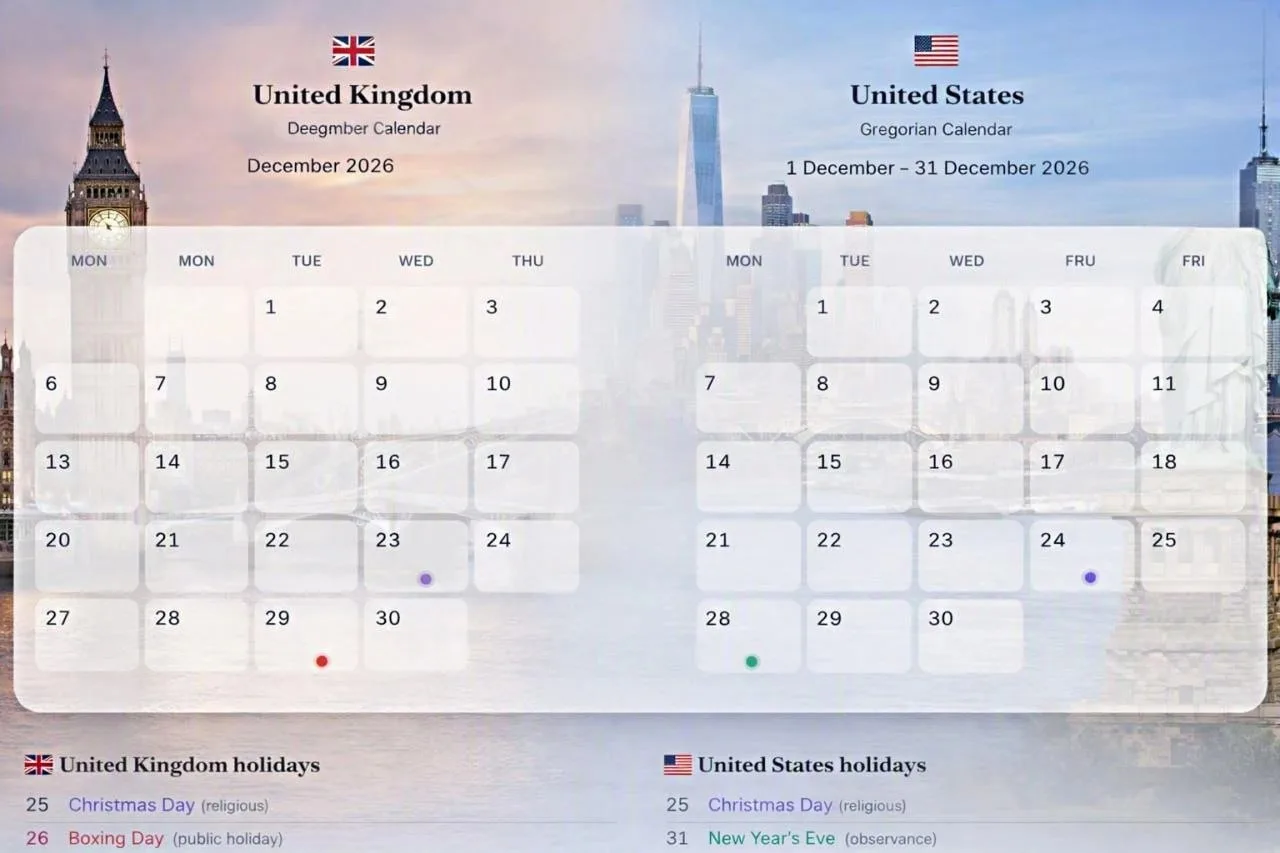
Christmas Day is Friday, 25 December
The substitute bank holiday for Boxing Day is Monday, 28 December
Taking annual leave on Tuesday 29, Wednesday 30 and Thursday 31 December can create a strong continuous break when combined with the surrounding weekends and bank holidays.
As always, check your employer’s opening dates and holiday policy before booking.
How Does the UK Compare with the US?
The biggest difference is the legal minimum.
In the UK, most workers have a statutory entitlement to 5.6 weeks of paid annual leave.
In the US, federal law does not require private employers to provide paid vacation or paid holidays. PTO and holiday benefits are generally determined by the employer and the employment agreement.
This means a UK worker generally starts with a legal minimum, while a US worker’s allowance can vary significantly from one employer to another.
Which Dates Should You Choose?
There is no single best set of dates for everyone. The right combination depends on:
How many annual leave days you have left
Which bank holidays your employer recognises
Your normal working pattern
Whether your employer closes between Christmas and New Year
Whether you prefer several shorter breaks or one longer holiday
For someone with a standard Monday-to-Friday schedule, bank holidays that fall on Mondays or Fridays are particularly useful because they combine naturally with weekends.
Find the Best Dates Automatically
You do not need to work through the entire calendar manually.
MultiCalendar’s Vacation Planner can calculate the strongest leave combinations based on your country, available annual leave and year.
Primary tool for UK readers:
UK Vacation Planner – 3 Annual Leave Days in 2026
You can also compare options with the US planner if needed:
US Vacation Planner – 3 PTO Days in 2026
FAQ
How many days of annual leave do I get in the UK?
Most workers are legally entitled to 5.6 weeks of paid annual leave. For a five-day working week, that normally equals 28 days.
Do UK bank holidays come on top of annual leave?
Not necessarily. Employers can include bank holidays within the statutory 5.6 weeks of annual leave. Check your employment contract or company policy.
How can I maximise my annual leave?
Look for bank holidays next to weekends and place your annual leave around them. The exact best dates depend on your working pattern and employer’s holiday policy.
How does UK annual leave compare with the US?
Most UK workers have a statutory minimum of 5.6 weeks of paid annual leave. US private-sector workers have no federal statutory minimum for paid vacation.
The Bottom Line
Maximising annual leave is less about taking more days and more about choosing the right ones.
In the UK, weekends and bank holidays can turn a relatively small number of annual leave days into much longer breaks. In 2026, the Summer Bank Holiday and the Christmas period offer particularly useful opportunities for planning.
If you know how many days you have available, the next step is simply to find the combinations that give you the most time away from work.